Sunday, 12 June 2016

Top 10 Social Media Jargons you need to know right now!


Here’s something interesting that will urge the media students  to check out the post! We have listed few such lesser known jargons of Social media that you definitely need to know right now.

1. Broadcast Syndication
The process in which television and radio programs are licensed by multiple radio stations and televisions, particularly without going through a broadcast network.
Syndication is more common in the United States than the rest of the world.
  
2. Search Engine Optimization
Everyone wants their website to appear closer to the top of search engine rankings. SEO is the process of organizing your website to give it the best chance for it.


3. Synergy
Synergy is, simply the teamwork or the coordination between the teams of the online companies.

4. Tweeps                                         
Twitter + People = Tweeps

5. Link Bait
It is designed specially to allure or attract the incoming links. News and widget hooks can be termed as the best examples of the link bait.

6. Traffic!
Traffic! Traffic! Traffic! 

Traffic refers to the visitors of any particular website and it is all that is
talked about these days.


7. Social Graph

The diagram of the interconnections between the people, with the people.

8. Vlogging
Not to be confused with “flogs”, which means fake blogs. Vlogging refers to video blogging. The contents of the blogs contain creative or any sort of videos.

9. Microblogging

The extreme short blog posts are popularly known as Micro blogging. Twitter can be termed as the best example of Micro blogging.

10. Podcast

An audio program in a compressed digital format, which is designed to be listened to over the web. 

Thursday, 9 June 2016

India's Five Best Journalists in Current Date

1. Arnab Goswami
The most popular journalist of India is Arnab Goswami in the present times. Politics and current affairs hold his primary interests. He has a live telecasted debate on Times Now at 9 pm every night. He has authored a book to combat terrorism and is well known for par excellence awards in the field of journalism.


2. Arun Shourie 

Not so much in action,  editor of Indian Express, Arun Shourie has proved his worth over the fans and audiences of the news media owing to his excellent journalistic attitude for his work. Author of many books. The international Press Institute has named one of the 50 Heroes of Freedom World Press as well.

3. Swapan Dasgupta

The most famous of the best contemporary journalist of India, Swapan Dasgupta is a journalist with right-wing attitudes. He is one of the most sought for panelists of the small screen as well. Swapan Dasgupta authors for a zillion journals.


4. Kanchan Gupta
The infamous advisory role that Kanchan Gupta provided for the PMO of the ruling government of Atal Bihari Vajpayee at his time of government is immense. Mr Gupta writes on politics and current affairs of the nation as well. One of the best sarcastic and wry journalists of India, Kanchan is straight, direct and intelligent. 


5. Sucheta Dalal
One of the most sought after and reliable financial journalists, Ms Dalal seems to be tailor made for all arrears of journalism. She runs a web magazine by the title Moneylife that has helped most people, she is also one of the boards of directors for Consumer Education and Research Centre situated in Ahemdabad.

Thursday, 2 June 2016

Lesser Known Tourists Spots in India- Part III

Paradise of Nature :  Mawlynnong Village

Mawlynnong is the village located in the east khasi hills district of Meghalaya. It is

situated 90 km from Shillong along the India-Bangladesh border. The total population of

the village counts 500 as per the surveys of June 2015 and the literacy rate is unbelievable which count 100%.  

Every villager is literate and has great fluency in their English language. It is on of the

hottest tourist attraction which is also known as ‘The God’s own garden”. This place is

considered to be the smallest hill station in India and also been termed as the cleanest village of Asia.

Beauty of Nature:

On the way to this place, the experiences of the travellers are magnificent. The hills are
covered with lush greenery forest floated with white and grey clouds.

Bonding of Human and Nature:

  • People there; follow their tradition by keeping their surroundings clean.
  • Dustbins are made up of bamboo stems, which is provided wherever required.
  • Use of polyethylene bags and smoking is banned in this village.
  •  The dumping grounds are the major reason behind their cleanliness. This cleaning tradition has been followed and passed over by the forefathers of the village.
Source of Income:
  • Main source of income is agriculture.
  •  Main crop is beetle nut.
  •  Other agricultural production includes production of Orange, Pineapple, Litchi and Jackfruit.

Tourist attraction:

  • Sky view: Made up of bamboo, which measures 85 feet; on top of which you’ll get a clear view of Bangladesh. This village also has their tropical garden, in which we can see exceptional flowers blooming.
  • Waterfalls: The waterfall is clean and natural. Adding a pinch to the scenic beauty, the waterfall is situated in the open greenery and covered with trees and mountains.
  •  Living Root Bridges: The bridges are made up of living tree.
  • Balanced Rock: There are large rocks balancing upon the small ones and it is said that, the Buddhism followers tend to meditate over these rocks.
Most Interesting facts:

  • Women are the ones who hold all the economic powers.
  •  The youngest daughter inherits the family’s wealth and property.

Sunday, 29 May 2016

Yellow Journalism

“Everybody comes with prejudices, coloured glasses on their eyes. Then they see
everything coloured according to their glasses. Yes, a few people come just like you,
unprejudiced, without any idea gathered from yellow journalism.”

Yellow Journalism, or the yellow press, is a type of journalism that presents no legitimate
well-researched news. The concept of Yellow Journalism revolves around using eye-
catching headlines to attract more audience. Techniques of yellow journalism may
include exaggerations of news events, scandal-mongering, or sensationalism.

Have you ever stood in the check-out line at a grocery store and went through the front
page headlines of the magazines on the shelf? Most of these headlines seem unbelievable
and at the same time, peak the curiosity of a person, enough to make them look inside
and read more.
That is what the magazine publisher aims to do. This type of reporting is known as
Yellow Journalism.

Yellow Journalism is a sensational style of newspaper reporting that emerged at the end
of the nineteenth century when rival newspaper publishers William Randolph Hearst and
Joseph Pulitzer competed for sales in the coverage of events leading up to and during the
Spanish-American War, and it’s a type of reporting that continues today.
Journalism these days is straying into entertainment and blurring out the lines between
serious news segments, news entertainment, and news comedy.

A good writer should be able to write comedic work that make his audience laugh, scary
stuff to freak them out, fantasy or science fiction that imbued them with a sense of
wonder, and mainstream journalism to give a clear and concise information to all.
Journalism allows its readers to witness history; fiction gives its readers an opportunity to
live it. Giving thought to journalism means giving thought to the political ends. Unless
there’s been a reaction, there’s been no journalism.

Literature is the art if writing something that will be read twice; journalism what will be
grasped at once.

Ratings don’t last. Good journalism does.

Wednesday, 25 May 2016

Facts and Figures about Investigative Journalism


Investigative Journalism is a part of journalism in which reports deeply investigate on a
single matter. This includes serious crime, political corruption, etc.
It may take a month or may be year for investigation and preparing a report of a sting
operation. This is basically conducted by newspapers, wire service and freelance
journalism.

Giving a look at the largest team of investigative journalist, the Washington based
international consortium of investigative journalism has been the most renowned one
which was launched in 1997.
The style of investigative journalism came in press of India in 1980s, which at the
beginning was prompted by political issue such as ‘Return to Power of Mrs. Gandhi”.

A few landmark cases came into limelight when Investigative Journalism started taking
place in India. The story of Fodder Scam leakage of a corruption scandal that involved
embezzlement of about 9.4 billion from the government treasury of Bihar, can be
considered as one such landmark cases of 1996.

Considering all other media channels and websites, "Tehelka" has made its way towards
investigative journalism and sting operations in a very efficient manner. The magazine
held their first sting operation on cricket match fixing, the scandal of which took place in
the year 2000. Investigative Journalism plays a very crucial role in the field of media and
has always been a helpful process leading to democracy.

Thursday, 19 May 2016

Lesser Known Tourist Spots In India- Part-II


Ananthapura Lake Temple: A place where a vegetarian crocodile resides.

Ananthapura lake temple is a Hindu temple built in the middle of a lake in the little village of Ananthapura, Kasaragod District of Kerala, South India. This lake is believed to be the only lake temple in Kerala, where Ananthapadmanabha Swami had supposedly settled down.

The most interesting tale to tell about this Hindu lake temple is the story of the guardian crocodile. Only one crocodile, which was named Babia, has been spotted since the ancient times there.


It is said that, even if the devotees would take bath in the lake, no instances of Babia harming anyone has been found yet. The only food that the crocodile grants is the ‘prashad’ offered by the devotees who visited the temple. Temple residents claim that Babia is a vegetarian crocodile and has never harmed anyone including the fishes of the pond.

The great mystery of this legend revolves behind the stories that had been narrated since the ancient times.


It is said that in 1945, a soldier had shot the crocodile dead and to everyone’s surprise, the soldier passed off within a few days, being encountered by snake bite. And soon, one more crocodile appeared in the lake.

It is said that only one crocodile resides at a time in the lake. When one dies, another appears.


The visitors or the devotee pays great respect to the crocodile as it is said to be the guard of the entrance and the shrine.


Monday, 16 May 2016

Lesser known tourist spots in India

Majuli, Assam: World’s largest fresh water island

Tourism means travel for pleasure; Tourism is the theory and practice of touring. It is the

business of attracting, accommodating and entertaining tourists. In a multi-religious and multi-

cultural country like India, there are more than 100 lesser known or we can say infamous places

which are yet to be explored by the Indians themselves.

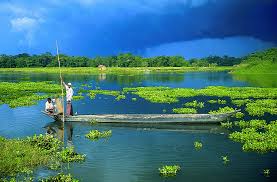
One of such lesser known tourist spots also include Majuli of Assam, which has also been termed as the “World’s largest fresh water island”. Majuli is a large river island which is located in the Bramhaputra River of Assam occupying an area of 1,250 square kilometers (483 sq mi),but significantly reducing to 352 Kilometers reason being erosion by the year 2014.

Majuli has shrunk as the river surrounding it has grown. This island was formed due to the course change by the river Brahmaputra and its tributaries.

Majuli is a beautiful and unexplored place resplendent with several festivals throughout.
Majuli is probably most beautiful during the monsoon, when the river is swollen and beautiful.
October-March is a nice time to visit, with the cool climate makes a trip to Majuli absolutely
worthwhile.

Mājuli is the abode of the Assamese neo-Vaisnavite culture and a must visit tourist spot in