Tuesday, 28 May 2019

How to write a lead sentence or paragraph


Determine your hook.

Look at the 5 Ws and 1 H. Why are readers clicking on this content? What problem are they trying to solve? What’s new or different? Determine which aspects are most relevant and important, and lead with that.

Be clear and succinct.

Simple language is best. Mark Twain said it best: “Don’t use a five-dollar word when a fifty-cent word will do.”

Address the reader as “you.”

This is the writer’s equivalent to breaking the fourth wall in theater, and while some editors will disagree with me on this one, I stand by it. People know you’re writing to them. Not only is it OK to address them as such, I think it helps create a personal connection with them.

Put attribution second.

What’s the nugget, the little gem you’re trying to impart? Put that information first, and then follow it up with who said it. The “according to” part is almost always secondary to what he or she actually said.

If you’re stuck, find a relevant stat.

If you’re trying to be clever or punchy or brilliant and it’s just not happening, search for an interesting stat related to your topic and lead with that. This is especially effective if the stat is unusual or unexpected, as in, “A whopping 80 percent of Americans are in debt.”

Borrow this literary tactic.

Every good story has these three elements: a hero we relate to, a challenge (or villain) we fear, and an ensuing struggle. Find these elements in the story you’re writing and lead with one of those.

When you’re staring at a blank screen.

Just start. Start writing anything. Start in the middle of your story. Once you begin, you can usually find your lead buried a few paragraphs down in this “get-going” copy. Your lead is in there — you just need to cut away the other stuff first.

Happy Learning!
Anamika Gupta
IAAN


Saturday, 25 May 2019

Types of Documentary


Expository Documentary
Expository Documentaries are the closest relatable to the term ‘Documentaries’. It is contrasting to the poetic documentaries in a way that expository documentaries intend to persuade or inform. It is bereft of ambivalent or poetic eloquence. This form consists the television and Ken Burns style.
Experimental Documentary:
Documentaries that donʼt easily fit any of the other categories. Often they drawon allied art forms (painting, dance, sculpture, photography, etc.) and can even incorporate elements of fiction.

Participatory Documentaries

Participatory Documentaries, while having elements of Observational and Expository, include the filmmaker within the narrative. This could be as minor as the filmmaker’s voice being heard behind the camera, prodding subjects with questions or cues — all the way to the filmmaker directly influencing the major actions of the narrative.

Reflexive Documentary

Reflexive Documentaries are familiar to participatory documentaries in a way that they also comprise the film-maker with the particular film. However, they make no effort to investigate an outside subject, unlike the participatory documentaries. Their aim is mainly to focus on themselves.
Per formative Documentaries

Per formative Documentaries are an experimental combination of styles used to stress subject experience and share an emotional response to the world. They often connect personal accounts or experience juxtaposed with larger political or historical issues. This has sometimes been called the “Michael Moore” style, as he often uses his own personal stories as a way to construct social truths (without having to argue the validity of their experiences).
 Poetic Documentary
Their main aim is to focus on experience, images and shows people the world from a different set of viewpoint. They are mainly loose and abstract depicting a kind of feeling rather than the truth. It is individualistic and experimental in form.

Happy Learning!
Anamika Gupta
IAAN


Wednesday, 22 May 2019

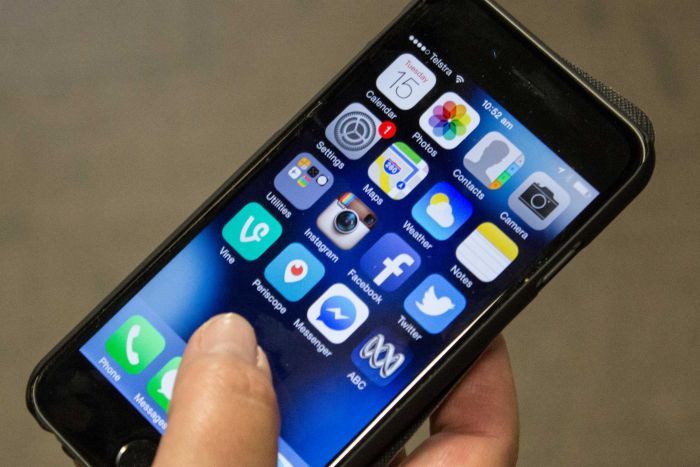
Advantages of Mobile Phones


1. Communication
Mobile phones provide the means to communicate with friends, family, coworkers, and indeed most of the world's population instantly. Unlike previous communication devices, they can be on hand for the caller at all times and used in any place where there is a signal.

2. Fashion and Self-Expression

Choosing which model of phone to carry, customizing things like the ringtone, or buying a more personal phone cover have all become a means of self-expression for mobile phone owners, informing others what sort of person you are.

3. Entertainment

As long you have your mobile phone, there is no reason to get bored There are a multitude of games to download and play, you can read an online article, or get involved with social media to pass time. Smartphone’s allow video watching, as well as listening to radio, podcasts, or music. Plus, if you attend a real life event, you can often store your ticket on your phone to display at the door.

4. Safety

Regarding the case on advantages and disadvantages of mobile phones, advantages accrued from having a phone go much behold the intentional ones. When traveling or going for a hike, your mobile phone offers entertainment and company. But think of it as a safety gadget. When you forget your direction back home or even get hijacked, a mobile phone GPRS can help you trace your way home or help authorities to locate you respectively. Lastly, if any emergency situation happens like an accident or a car breakdown, you can call for rescue or help.

5. Alarm & reminder

You can manage a to-do list using your mobile phones reminder option. Additionally, if you are planning to wake up early in the morning, you can set the alarm with a volume and notification sound of choice. This will help you wake up early enough and avoid being later for your meeting, class or any scheduled activity.
6. Various utilities
Your phone is not only a call, entertainment or data transfer gadget. There are other utility tips of these devices. A mobile phone can act as a torch, a recording device, data storage, calculator, calendar, camera, and many other utility features.
7. Legal Situations


Sometimes you will face the legal issues in your life. These issues can be solved by mobile with proof of call recording or SMS data recovery.

8. Alarm Notes & Reminder

Wants to go office early in the morning but you are always late, Alarm is the best solution for this problem. You can also add notes and reminders in your mobile phones in the favor of your help.

Happy Learning!
Anamika Gupta
IAAN


Tuesday, 21 May 2019

Characteristics of a Good Reporter


Regardless of the news subject, news value or format and technology that delivers the information, someone must gather the facts and organize them to tell the story. 

That person is called a reporter, and good reporters have some common characteristics that make them effective.

The most important characteristic of a reporter is ethical behavior. When a reporter fails to operate according to a strong ethical and moral code of behavior, that one individual's failing can damage the overall credibility of the news media in long-term, serious ways.

1. Exhibit broad curiosity; eagerly adapt to new technologies and platforms.
2. Think about multiple audiences.
3. Work hard to create context for their audiences.
4. Smartly balance their time on story choices and audience interactions.
5. Spend considerable time building relationships with sources, readers.
6. Build connections and teamwork within their own newsrooms.
7. Find their own way and direct their own work.

Reporters must also show flexibility. Those who want the routine of 9 to 5 desk job should the world of television news. Few reporters, editors and producer work Monday through Friday during normal business hours, and as your career advances, you'll probably work a variety of schedules that may include weekends. 

Newsroom personnel must be able to change plans in an instant and make the change with a positive attitude. You may  be on your way to cover a council meeting and be  diverted to the scene of an accident. You may have dressed for a live shot in front of a theater and find yourself trudging through mud during a driving rain. Reporters and photographers work in a variety of settings and meet and interview all types of people. Although some days in the newsroom are routine, most days are not, requiring a person to be flexible.


Happy Learning!
Anamika Gupta
IAAN


Monday, 20 May 2019

Difference between linear and nonlinear editing


Linear Editing is a process of selecting, arranging and modifying images and sound in a pre-determined, ordered sequence – from start to finish. Linear editing is most commonly used when working with videotape. Unlike film, videotape cannot be physically cut into pieces to be spliced together to create a new order. Instead, the editor must dub or record each desired video clip onto a master tape.For example, let’s say an editor has three source tapes; A, B and C and he decided that he would use tape C first, B second and A third. He would then start by cutting up tape C to the beginning of the clip he wants to use, then as he plays tape C, it would also be simultaneously recording the clip onto a master tape. When the desired clip from tape C is done, the recording is stopped. Then the whole process is repeated with tapes B and A. 

 There was alternative starting to emerge - almost a rejection of the strict time code rules of linear editing and going back to the freedom of cutting actual film - a system that would eventually be called Non-Linear editing. Non linear editing was nondestructive. You could assemble a cut in whatever order you wanted and go back and make changes without disturbing the rest of the assembly. There was no generation loss that you had with linear editing that required you to copy from one tape to another. It was a much more natural way of editing. 

Nonlinear editing differs from linear editing in several ways. 

First, video from the sources is recorded to the editing computer’s hard drive or RAID array prior to the edit session. 

Transitions can be placed between the segments. Also, most of the video editing programs have some sort of CG or character generator feature built in for lower-thirds or titles. 

The work-in-progress can be viewed at any time during the edit in real time. Once the edit is complete, it is finally laid to video. 

Non-linear video editing removes the need to lay down video in real time. It also allows the individual doing the editing to make changes at any point without affecting the rest of the edit.

Happy Learning!
Anamika Gupta
IAAN 

Saturday, 18 May 2019

मीडिया में अपना करियर कैसे शुरू करें?

आज के समय में एक पत्रकार होने के साथ-साथ चुनौतीपूर्ण करियर विकल्प भी अधिक रोमांचक हो सकते हैं। यदि आपने अभी-अभी अपने सीनियर स्कूल के एग्जाम क्लियर किए हैं और ट्रेडिशनल के अलावा करियर ऑप्शन की तलाश कर रहे हैं। मास कम्युनिकेशन आपके लिए एक हो सकता है। शुरू करने के लिए, आपको अपने आसपास के सर्वश्रेष्ठ मीडिया कॉलेज का पता लगाना होगा और जनसंचार में अपना स्नातक पाठ्यक्रम शुरू करना होगा। हालाँकि, बैचलर ऑफ आर्ट्स इन मास कम्युनिकेशन / मास मीडिया / जर्नलिज्म से पाठ्यक्रम का नाम अलग-अलग हो सकता है लेकिन पाठ्यक्रम कमोबेश एक ही है। नई दिल्ली में किसी एक को ढूंढना बेहतर है क्योंकि अधिकांश प्रमुख समाचार चैनलों के दिल्ली एनसीआर में मुख्य कार्यालय हैं

दिल्ली में बस Google के शीर्ष 10 मीडिया संस्थान हैं और आप जाने के लिए तैयार हैं। एक राउंड लें और सर्वश्रेष्ठ बुनियादी ढांचे की तलाश करें जिसमें रेडियो लैब, न्यूज रूम, स्टूडियो, वीडियो एडिटिंग लैब, कंप्यूटर लैब जैसी व्यावहारिक प्रयोगशालाएं हों और संकाय का अनुभव हो। यह घातक संयोजन निश्चित रूप से आपको मीडिया की सबसे अच्छी शिक्षा प्रदान करेगा ताकि आप डिग्री के अंतिम वर्ष तक पहुँचते ही आसानी से मीडिया हाउस के काम को समझ सकें

भले ही आपने अलग-अलग डोमेन में स्नातक किया हो, लेकिन अब जनसंचार / मीडिया / पत्रकारिता में रुचि विकसित की हो, चिंता न करें, आप मास्टर डिग्री प्रोग्राम में शामिल हो सकते हैं। मास्टर प्रोग्राम में दाखिला लेने के लिए मास कम्युनिकेशन / मीडिया / मास मीडिया / जर्नलिज्म में अंडर ग्रेजुएट डिग्री करने का कोई प्रतिबंध नहीं है

तो आप किसका इंतज़ार कर रहे हैं?

Apply now. www.iaan.org


Anamika Gupta
IAAN

Friday, 17 May 2019

Advantages and Objectives of Advertising


Advertising is basically a way of communication. Any business or company uses the advertising method to communicate with public regarding its brand, product or services.
Advertising can also be defined as the way of capturing public attention through paid messages or information which helps promote or sell a product, service or brand.
Advertising includes the public announcements to reveal new product launches, the commercial activities done to stimulate demand, and encourage people to attend a commercial event.
Objectives of Advertising
Brand building – Advertising helps in the establishment and promotion of a brand in the existing market. It also aids in the creation of new market for the brand. With the help of audio-visual advertisements, you can also reminding and reinforce the brand message into your target customers’ mind.
Creation of demand – One of the main objectives of advertising is that it persuades the customers to buy and use a particular product. Hence, advertising also contributes in creating brand awareness and demand.
Informing Customers about a Product, Company or Service – Advertising is also a strong medium of communicating about product, company or service.
Promoting a Particular Feature – Specific objectives of companies can also be fulfilled with the help of advertising. Building up more positive customer attitudes, beating negative promotion, extending customer base, creating comparison in customer’s mind and various other particular objectives can be attained by making a specific advertisement for the same.
Achieve sales and profit goals – Advertisements create awareness about a brand and help in increasing the demand for a product or service. The increased demands results in increased sales and so, profit goals of a company are attained with the help of advertising.

Advantages Of Advertising
Helps In Brand Building: Advertisements work effectively in brand building. Brands who advertise are preferred over those which doesn’t.
Helps In Launching New Product: Launching a new product is easy when it is backed by an advertisement.
Boosts Up Existing Customers’ Confidence In The Brand: Advertisements boosts up existing customers’ confidence in the brand as they get a feeling of pride when they see an advertisement of the product or the brand they use.
Attracts New Customers: Attractive advertisements help the brand in gaining new customers and expanding the business.
Educates The Customers: Advertisements inform the customers about different products existing in the market and also educates them in what they should look for in an apt product.

Happy Learning!
Anamika Gupta
IAAN